
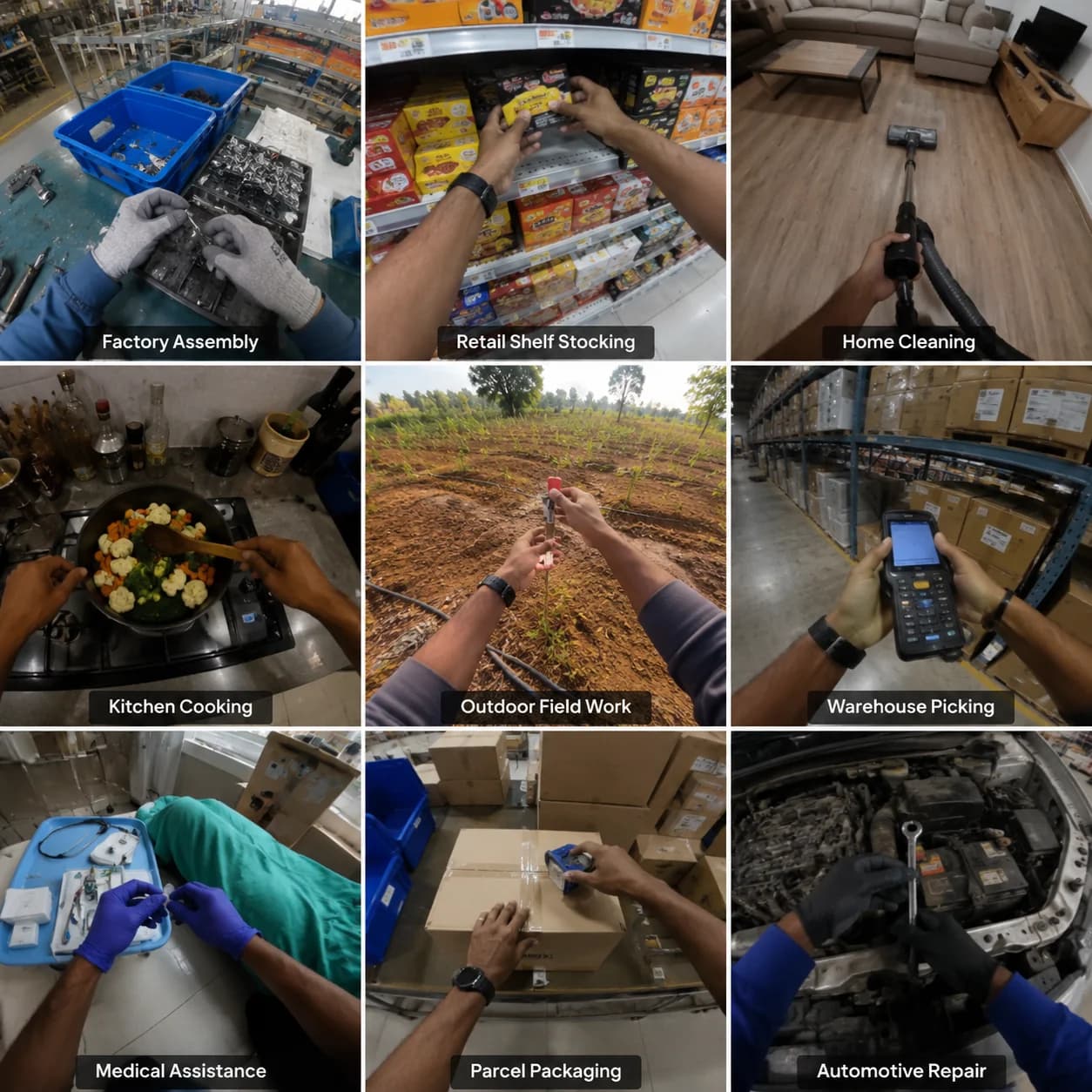
Ground language in observable work
A useful task description names the goal, objects, environment, and success condition without inventing hidden intent. That gives a VLA model language context it can connect to visible actions.
Keep the description specific enough to distinguish similar actions such as lift, place, align, tighten, fold, or inspect.
Capture state transitions
The value of a demonstration often lives in the transition: a hand contacts an object, a tool changes a component, or a deformable item moves into a target state.
Timestamped phases and object-state labels make these transitions searchable and easier to evaluate.
Preserve real variation
VLA training data should include the variation a deployed system will face: different hands, speeds, lighting, work surfaces, tools, and object arrangements.
Quality control should remove unusable footage, not erase every natural difference.